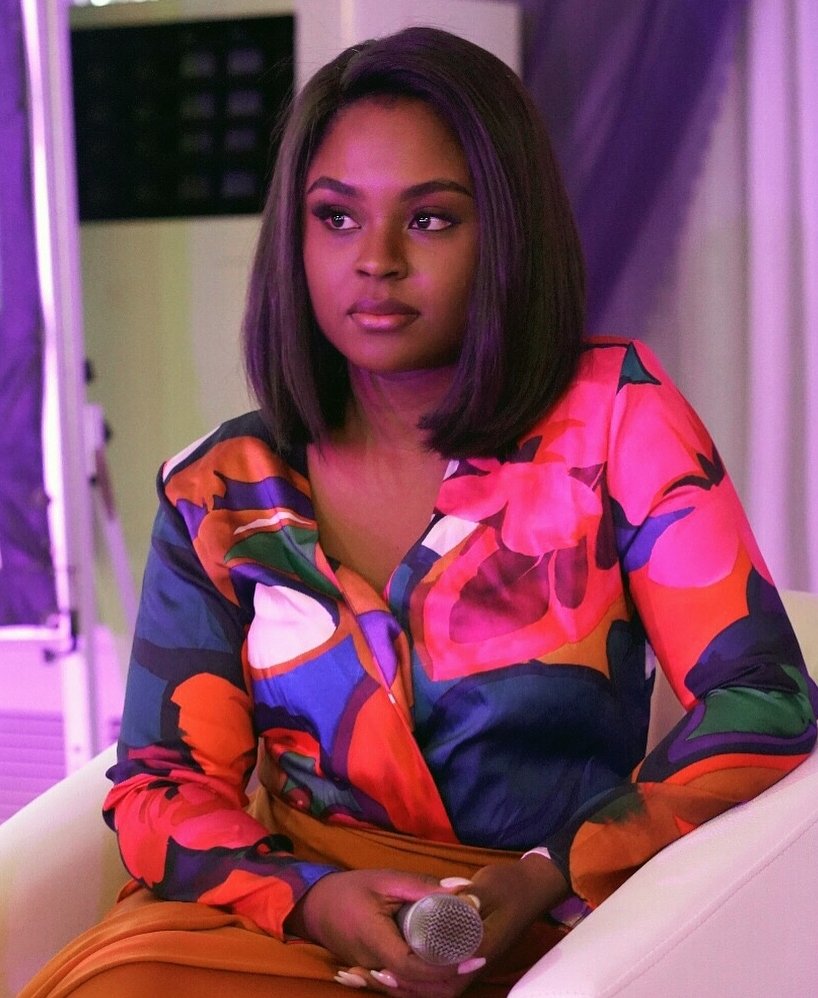
Deola Sagoe built her fashion house at a time when Nigerian haute couture barely existed as a commercial category. When she launched in the 1990s, the local luxury fashion market was served almost entirely by imported European labels or by tailors who adapted Western designs for Nigerian fabrics. She insisted on something different: indigenous Nigerian textiles, Aso-Oke, Adire, Akwete, treated with the technical rigour of European couture construction. Four decades later, her garments have appeared at international exhibitions and state occasions, and her approach has shaped how Nigerian fashion positions itself to the rest of the world.
She launched her label in the 1990s and steadily built an international reputation, showing her work at exhibitions and dressing prominent figures. Her insistence on treating Nigerian textiles with couture-level rigour set her apart in a market then dominated by imports. That approach helped reshape how African fashion was perceived abroad.
Over the years she has become a mentor to a later generation of designers, including through her own family label. Her longevity has made her a reference point in the industry.
Quick profile
Full name
Deola Sagoe, born Deola Ade-Ojo
Born
21 August 1966, Ondo, Nigeria
Father
Chief Michael Ade-Ojo, founder of Elizade Nigeria
Profession
Fashion designer, creative director
Net worth (est.)
$5 million to $10 million
Brand
Deola Sagoe Inc.
Signature
Nigerian heritage fabrics in haute couture
Background and education
She was born Deola Ade-Ojo on 21 August 1966 in Ondo, the first child of Chief Michael Ade-Ojo, the businessman who founded the Elizade motor group and later Elizade University, and his first wife Elizabeth Wuraola Ade-Ojo. That background gave her an unusually close view of how a Nigerian company is actually run. She studied business administration at the University of Miami in the mid 1980s and took a master’s in finance and management at the University of Lagos, and she approached fashion with the rigour of a businessperson as much as the sensibility of an artist.
Her route into the trade ran through her mother. In 1988 she joined Odua Creations, the label Elizabeth Ade-Ojo had built, with the intention of pushing its repertoire toward more contemporary design. She left to start her own label in 1989. Her early work gained attention through Lagos fashion events and the emerging African luxury market of the 1990s, a period when the idea of African high fashion being exported to international platforms was still novel. The MNET and AngloGold African Designs award in 2000 was the first major signal that the ambition was working.
Fashion career
Deola Sagoe’s designs are distinguished by their use of Aso-Oke, a hand-woven Yoruba ceremonial fabric, as well as Adire tie-dye and Akwete woven cloth. She elevates these traditional materials into structured, heavily embellished couture pieces that are appropriate for international red carpet events while remaining deeply Nigerian in identity. Her work has been worn by Nigerian first ladies, Nollywood stars, and dignitaries at formal occasions.
She launched a diffusion line called Clan, created in collaboration with her three daughters, to offer a more accessible tier of Nigerian-inspired fashion. Clan targets a younger, style-conscious consumer base who want the aesthetics of Deola Sagoe’s world at a lower price point. The brand extended her reach beyond the haute couture client and into the growing luxury-adjacent market.
International recognition
Deola Sagoe has shown collections at African Fashion Week in New York and London and has been featured in international fashion media including British Vogue and the New York Times. She is regularly cited by international observers as one of the most important figures in the African luxury fashion movement and has received recognition from industry bodies on the continent and abroad.
Net worth and business
Deola Sagoe’s net worth is estimated at between $5 million and $10 million, reflecting decades of building a luxury brand in a challenging market. Her income comes from haute couture commissions, the Clan diffusion line, speaking engagements, and brand consultancy. She is also affiliated with the Sagoe family business interests in Lagos.
Away from work
Deola Sagoe is married to Lolu Ojewumi and they have daughters who collaborate with her on the Clan brand. Her family connection to the fashion business has given Clan an authenticity that purely commercial diffusion lines often lack, as the daughters bring their own style perspectives into the creative process.
The Clan by Deola Sagoe
Recognising that her couture price points placed her work beyond the reach of most Nigerian consumers, Sagoe launched The Clan, a diffusion line designed to make her aesthetic accessible at lower price points without compromising on fabric quality or construction standards. Diffusion lines are common in European fashion as a business model, but executing one in the Nigerian market presents particular supply chain challenges: maintaining quality at scale requires production systems that most Nigerian fashion houses have not invested in building. The Clan was Sagoe’s attempt to solve that problem, and its reception demonstrated that there was significant demand for well-made Nigerian designer clothing at aspirational but not couture prices.
Why Deola Sagoe matters
Deola Sagoe is a pioneer of Nigerian high fashion, among the first to take Nigerian couture to major international runways. She is known for elevating indigenous fabrics into luxury design and for mentoring a later generation of designers.
Reader questions
What fabrics does Deola Sagoe use?
Deola Sagoe is known for working with traditional Nigerian fabrics including Aso-Oke, a hand-woven Yoruba ceremonial cloth, Adire, a Yoruba tie-dye fabric, and Akwete, a woven fabric from Igbo southeastern Nigeria. She transforms these into haute couture pieces that can compete aesthetically on international red carpets.
What is Clan by Deola Sagoe?
Clan is a diffusion fashion brand launched in 2011 by Deola Sagoe in collaboration with her three daughters, Teni, Aba and Tiwa. It offers a more accessible price point than her main couture line while retaining the Nigerian heritage fabric aesthetic and craftsmanship that defines the Deola Sagoe brand identity.
Has Deola Sagoe shown at international fashion events?
Yes. She has shown collections at African Fashion Week in New York and London and has been featured in international fashion publications including British Vogue and the New York Times. She is widely regarded as one of Africa’s most internationally recognised luxury fashion designers.
Where did Deola Sagoe study?
She studied business administration at the University of Miami in the mid 1980s and later took a master’s in finance and management at the University of Lagos. She has no formal fashion training. That business education informed the commercial discipline with which she has built and managed her fashion house over several decades, and it explains why she entered the trade through her mother’s company rather than through a design school.
Who is Deola Sagoe’s father?
Her father is Chief Michael Ade-Ojo, the founder of the Elizade motor group and of Elizade University, and she is his first child. Her mother, Elizabeth Wuraola Ade-Ojo, ran the fashion label Odua Creations, which Deola joined in 1988 before starting her own line the following year. The family gave her both the commercial networks and the working example of a fashion business.
Conclusion
Deola Sagoe helped define what Nigerian high fashion could be, emerging as one of its most ambitious early designers. She was among the first to carry the country’s couture onto major international runways. That early boldness helped put Nigerian design on the global map.
Her work elevating indigenous fabrics into luxury pieces expanded the world’s perception of African design. She treated local textiles as material worthy of the finest couture. That approach influenced how a generation of designers thought about heritage and luxury.
As a mentor to younger designers, including through her own family label, she leaves a mark that reaches beyond her own collections. Her longevity has made her a reference point in the industry. She remains one of the most respected names in African fashion.
Sources consulted
Her birth name Deola Ade-Ojo, the 21 August 1966 date, her birth in Ondo and her parents Chief Michael Ade-Ojo and Elizabeth Wuraola Ade-Ojo are recorded in the Wikipedia biography of Deola Sagoe and its cited sources. Her 1988 entry into her mother’s label Odua Creations and the 1989 launch of her own line are documented by Lionesses of Africa. The MNET and AngloGold African Designs award in 2000, the United Nations Catwalk the World appointment in April 2006 and the 2015 costume design awards are from the same Wikipedia record. CLAN was launched with her daughters in 2011. Net worth figures are third-party estimates and are not verified.
Max Adeyemi is a Lagos-based writer covering Nigerian and African entertainment, sport, business, and culture. He has spent over a decade tracking the careers, controversies, and quiet achievements of the people who move the culture. He writes all profiles on Nolly.