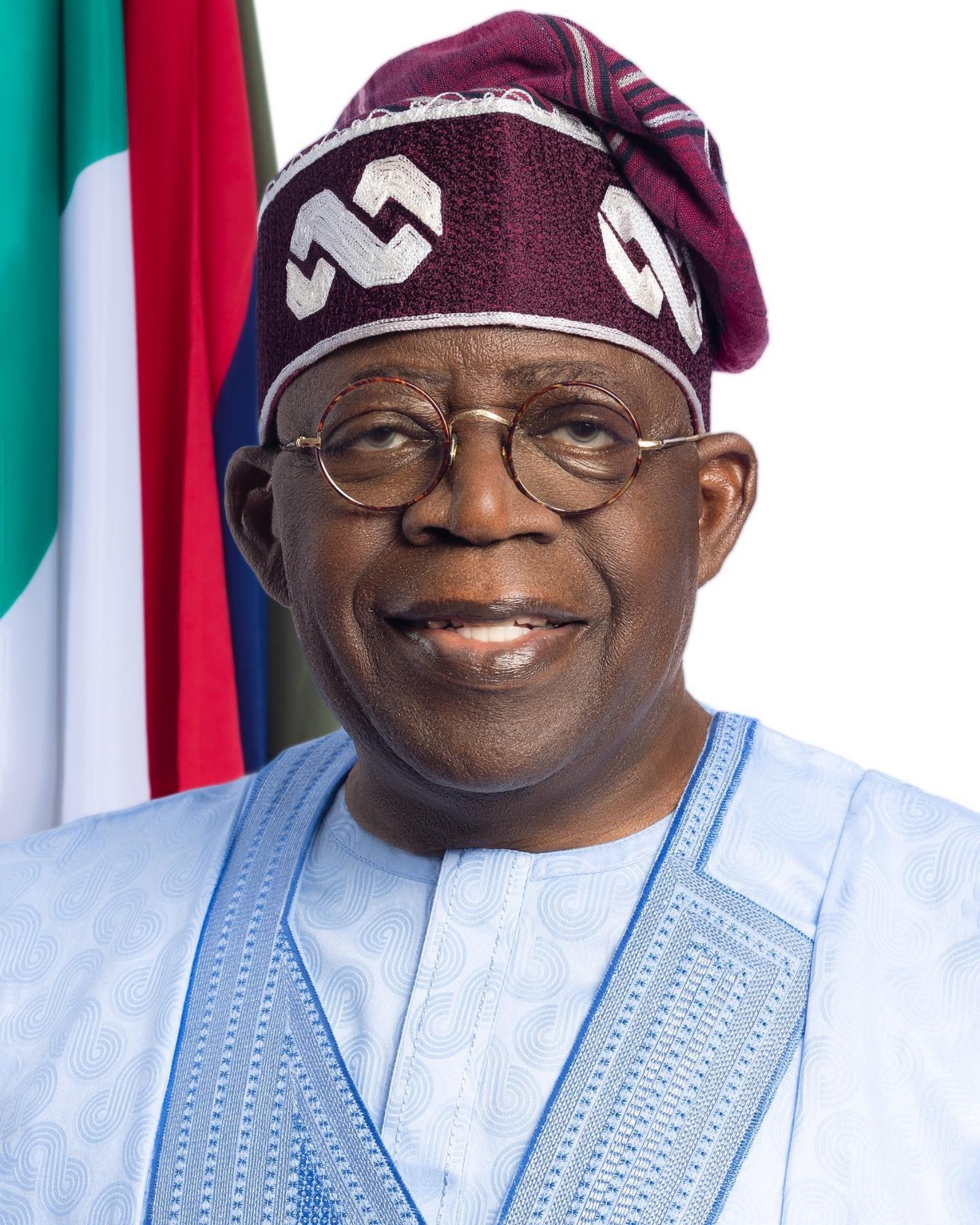
Bola Tinubu has been the most consequential political figure in Nigeria for the past quarter century without holding the presidency for most of it. As Lagos State Governor from 1999 to 2007, he implemented fiscal reforms that turned Nigeria’s most commercially significant state into a study in what subnational government could become. The political network he built over the following decade, known collectively as the Jagaban structure, delivered him the APC presidential ticket in 2022 and the presidency in the disputed 2023 election, completing the longest political project in modern Nigerian history.
He came to the presidency with one of the longest political resumes of any modern Nigerian head of state. He served as Senator for Lagos West in the short-lived Third Republic Senate (1992 to 1993), as Governor of Lagos State for two terms (1999 to 2007), and as the principal architect of the 2013 merger that produced the All Progressives Congress, the coalition that ended sixteen years of People’s Democratic Party rule at federal level.
His full name is Asiwaju Bola Ahmed Adekunle Tinubu. He was born on 29 March 1952 in south-western Nigeria. He turned 74 in March 2026.
This profile walks through his pre-political career as an accountant trained in the United States, his exile years under Sani Abacha, his eight-year run as Lagos State governor, his role in the founding of the APC, his 2023 election victory over Atiku Abubakar and Peter Obi, and the policy record of his first three years in office.
In brief
Full name
Bola Ahmed Adekunle Tinubu
Honorific
Asiwaju (Yoruba: leader)
Date of birth
29 March 1952 (most consistently cited official date)
Age (2026)
74
Stated birthplace
Lagos, Nigeria
State of origin
Lagos State
Heritage
Yoruba
Religion
Muslim
Education
Chicago State University, accounting
Spouse
Senator Oluremi Tinubu
Political party
All Progressives Congress (APC), co-founded 2013
Current office
16th President of Nigeria, sworn in 29 May 2023
Prior office
Governor of Lagos State, 1999 to 2007
2023 election result
8.79 million votes (36.6 percent)
Early life and family background
The earliest verifiable details of Tinubu’s life place him in south-western Nigeria in the early 1950s. The most commonly cited birthplace is Lagos, on 29 March 1952. Court filings and personal records about aspects of his pre-1970s biography have been a recurring point of legal contention, and some of the details remain disputed.
His mother, Abibatu Mogaji, was a long-running market trader and the President of the Association of Nigerian Market Women and Men from 1981 until her death in 2013. Her position in Lagos’s market politics is widely understood by Lagos commentators to have shaped the political base her son later built.
He attended primary and secondary school in south-western Nigeria. By the late 1960s and early 1970s he had decided to pursue further education in the United States.
Chicago years and the Mobil career
Tinubu studied accounting at Chicago State University in Illinois, graduating in 1979. He has stated in various interviews and in his presidential campaign materials that he worked part-time during his studies to fund the degree.
After graduating, he remained in the United States for several years, working in accounting roles at companies including Arthur Andersen and Deloitte, Haskins, and Sells. He has cited these years as formative in his understanding of corporate financial discipline.
He returned to Nigeria in the early 1980s and joined Mobil Nigeria Unlimited as an accountant. He rose through the finance function at Mobil through the mid-1980s, becoming Treasurer of the Nigerian subsidiary before he transitioned full-time into politics in the early 1990s.
The Third Republic Senate and exile
Tinubu entered electoral politics as a Lagos West senatorial candidate in 1992 under the banner of the Social Democratic Party (SDP). He won the seat and served in the Third Republic Senate from January 1993 until military head of state Sani Abacha dissolved the legislature in November of that year.
The Abacha years pushed Tinubu into exile in the United Kingdom and the United States. He became one of the more visible voices of the National Democratic Coalition (NADECO), the pro-democracy movement that campaigned internationally for the return of constitutional rule.
NADECO’s broader cause was the validation of the 12 June 1993 presidential election, which had been won by Moshood Kashimawo Olawale Abiola and annulled by then military head of state Ibrahim Babangida. Tinubu returned to Nigeria after Abacha’s death in June 1998 and the subsequent transition to civilian rule.
Governor of Lagos State, 1999 to 2007
Tinubu won the first post-transition Lagos State gubernatorial election in 1999 under the Alliance for Democracy (AD), the dominant south-western political vehicle of that period. He defeated the National Republican Convention candidate by a wide margin and was sworn in on 29 May 1999.
His first-term programme prioritised the restructuring of the Lagos State Internal Revenue Service, with technical assistance from the consulting firm Alpha Beta. The reform expanded the state’s internally generated revenue base from less than three billion naira a month to more than seven billion by the end of his second term.
He was re-elected in 2003 with a reduced margin against the People’s Democratic Party, the only south-western governor to retain his seat in that election cycle. The second term continued the institutional building work and laid the foundation for the urban planning and transport projects that Babatunde Fashola, his successor, built on.
Tinubu left office at the constitutional handover on 29 May 2007. His political successors as Lagos governor (Babatunde Fashola 2007 to 2015, Akinwunmi Ambode 2015 to 2019, and Babajide Sanwo-Olu 2019 onwards) have all come from his political circle, making Lagos the longest single-political-camp state in democratic Nigerian history.
Founding the APC and the road to 2023
Tinubu was a central figure in the 2013 merger of the Action Congress of Nigeria (ACN), the Congress for Progressive Change (CPC), and a faction of the All Nigeria Peoples Party that produced the All Progressives Congress. The merger ended the PDP’s sixteen-year run at federal level when the APC won the 2015 presidential election under Muhammadu Buhari.
Buhari served two terms from 2015 to 2023. Through both terms, Tinubu was widely understood inside Lagos and APC circles to be the leading southern claimant to the post-Buhari nomination, though the formal selection process did not begin until 2022.
In June 2022, Tinubu won the APC presidential primary in Abuja against Vice President Yemi Osinbajo and several other contestants. His campaign trail “emi lokan” (“it is my turn”) speech, delivered in Abeokuta in early June 2022, became the most quoted line of the primary.
The February 2023 general election was a three-way contest. Tinubu won 8.79 million votes (36.6 percent of the valid total), ahead of Atiku Abubakar of the PDP (6.98 million) and Peter Obi of the Labour Party (6.10 million). Both runner-up campaigns contested the result at the Presidential Election Petition Court. The court dismissed the petitions in September 2023. The Supreme Court affirmed the outcome in October 2023.
Presidency, 2023 to present
On taking office on 29 May 2023, Tinubu used his inaugural address to announce the immediate end of the fuel subsidy, an item of federal expenditure that had cost the budget an estimated four to five trillion naira annually in the years preceding. Within weeks the Central Bank of Nigeria moved to unify the multiple foreign exchange windows that had distorted the naira’s market price for almost a decade.
Both decisions had been recommended by the International Monetary Fund, the World Bank, and successive Nigerian economic teams for over a decade. They were also implemented with a sequencing and a communications style that produced the largest cost-of-living shock of Nigeria’s post-military era, with measurable declines in real household purchasing power through 2023 and 2024.
His administration has dissolved the boards of numerous federal agencies and state-owned enterprises, replaced the bulk of the military and paramilitary leadership, supported the ECOWAS response to the 2025 Benin coup d’état, and expanded a security cooperation framework with the United States against Islamic State West Africa Province.
The administration survived an alleged coup attempt in 2024, which the National Security Adviser’s office described in subsequent press briefings as having been disrupted at an early planning stage. The president has not commented on the matter in detail.
Personal background
Tinubu is married to Senator Oluremi Tinubu, who served as Senator for Lagos Central from 2011 to 2023. As of 2026 she is the First Lady of Nigeria. The couple have several children together, the most publicly visible of whom is Folashade Tinubu-Ojo, the Iyaloja-General of Nigeria (the head of the country’s market women’s network), succeeding her late grandmother in that role.
Tinubu is a Muslim and a regular contributor to Muslim charitable causes in Lagos. The marriage between him (a Muslim) and Oluremi (a Christian) is interfaith, and both have been openly observant of their respective traditions throughout their public lives.
He has had publicly disclosed health concerns over the last decade, including documented foreign medical visits. His public health record has been the subject of recurring opposition press commentary, much of which has been disputed by the Presidency.
Awards and honours
As President of Nigeria, Tinubu holds the title of Grand Commander of the Order of the Federal Republic (GCFR) automatically by virtue of office, the highest national honour. He had previously been awarded the Grand Commander of the Order of the Niger (GCON) in 2015 in recognition of his role in the political transition.
He holds the traditional title of Asiwaju of Lagos and the additional title of Jagaban of Borgu, conferred by the Emir of Borgu in 2007. The Borgu title has become one of his most-used political honorifics in APC circles.
Beyond the formal honours, he holds honorary doctorates from several Nigerian universities, including the Lagos State University.
People also ask
When was Bola Tinubu sworn in as President of Nigeria?
On 29 May 2023, the constitutional handover date set after the February 2023 general election. He is the sixteenth person to hold the office and the seventh elected civilian president since the 1999 transition.
What political offices has Tinubu held?
He has served as Senator for Lagos West (1992 to 1993, Third Republic), Governor of Lagos State for two terms (1999 to 2007), and as President of Nigeria from 2023. He has also held the de facto leadership of the All Progressives Congress, the ruling federal party, since its 2013 founding.
What is “emi lokan”?
“Emi lokan” is the Yoruba phrase meaning “it is my turn”, drawn from Tinubu’s June 2022 speech in Abeokuta during the APC presidential primary campaign. The line, in which he set out his claim to the APC nomination, became the most quoted slogan of his presidential run.
What were Tinubu’s first major policy decisions as president?
His inaugural address on 29 May 2023 ended the fuel subsidy with immediate effect. Within weeks the Central Bank of Nigeria moved to unify the multiple foreign exchange windows, allowing the naira to find a market-clearing rate. Both decisions had been long recommended by the IMF and World Bank, and both produced a substantial inflation shock.
Who is Oluremi Tinubu?
Senator Oluremi Tinubu is the President’s wife. She served as Senator for Lagos Central from 2011 to 2023 and has been the First Lady of Nigeria since 2023. She is a practising Christian, making the Tinubu marriage interfaith.
Conclusion
Bola Tinubu is one of the most consequential political figures in modern Nigeria. His years as Governor of Lagos State reshaped the administration and finances of the country’s commercial capital. That record built his reputation as a formidable political operator.
As a founder of the party that would become the APC, he played a central role in the coalition that took national power. His political network earned him a reputation as a kingmaker long before his own presidential run. Few figures have shaped party politics in the country as directly.
His election as President in 2023 placed him at the head of Africa’s most populous nation. His administration has faced significant economic challenges from the outset. His presidency represents the culmination of one of the country’s most enduring political careers.
References
Independent National Electoral Commission (INEC), 2023 presidential election results
BBC News, Nigerian politics coverage
Reuters, Nigerian economy coverage on fuel subsidy and FX unification
Premium Times, presidential election and administration coverage
This Day, Nigerian Tribune, political desks
The Federal Government of Nigeria, Office of the President, statehouse.gov.ng releases
This article is editorial and neutral. Corrections welcomed at hello@nolly.com.ng.
Max Adeyemi is a Lagos-based writer covering Nigerian and African entertainment, sport, business, and culture. He has spent over a decade tracking the careers, controversies, and quiet achievements of the people who move the culture. He writes all profiles on Nolly.