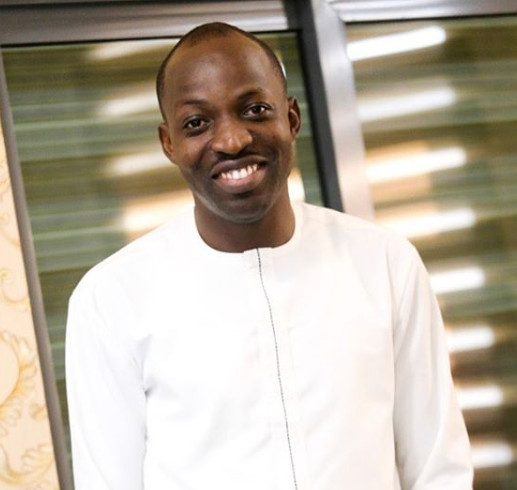
Prospa Ochimana wrote “Ekwueme”, which became one of the most played gospel songs in Nigerian churches between 2017 and 2020. He wrote it as an act of worship, recorded it as a church recording, and watched it grow through a network of congregations before streaming platforms picked it up and carried it further. The song’s story became more complicated in 2022 when Osinachi Nwachukwu, who sang the lead vocals, died in circumstances that sparked a major public discussion about domestic violence in Nigeria. Ochimana’s navigation of that legacy has been careful and deliberate.
He is a pastor and worship leader based in Abuja, and his approach to gospel music is rooted in a pastoral understanding of how worship functions in communal settings. Ekwueme’s structure, which builds through repeated declarations of divine faithfulness, is designed for congregational engagement, and its spread through church settings reflects that design intention. The song was not engineered for streaming charts but for the particular experience of group worship, and it found its audience through exactly those channels.
The song’s association with Osinachi Nwachukwu, who died in 2022 and whose death generated an outpouring of public sympathy and a significant discussion about domestic violence in Nigerian society, gave Ekwueme an additional layer of cultural significance beyond its purely musical impact. The song remains widely played in 2026 as a tribute to her memory as well as a worship composition in its own right.
The essentials
Full name
Prospa Ochimana
Birthplace
Kogi State, Nigeria (Abuja-based)
Born
6 November; birth year not publicly documented
Nationality
Nigerian
Genre
Gospel
Known for
Ekwueme (featuring Osinachi Nwachukwu, 2017)
Active
2010s to present
Net worth estimate (2026)
~$300k to $1m (multiple sources; estimate, not verified)
Ministry and background
Prospa Ochimana is from Kogi State and is a pastor and worship leader who has developed his music ministry within the Nigerian Pentecostal and charismatic church environment. He is unusually private about biographical detail, and while his birthday is given as 6 November, no birth year appears in any published source. His base in Abuja, Nigeria’s federal capital, gives him access to a diverse church-going population that reflects the pan-Nigerian demographic of the capital city. His ministry activities include church service leadership, conference worship leading, and the recording work that has produced his public profile.
His songwriting approach is pastoral rather than commercially oriented, and he has spoken in interviews about writing songs in response to specific moments of spiritual reflection rather than in response to market demand. Ekwueme emerged from that process: a personal expression of faith in God’s faithfulness that found its public expression when he recorded it with Osinachi Nwachukwu and released it to the Nigerian Christian community.
Beyond Ekwueme, his catalogue includes songs including Jesus You Dey Reign, My God Is Too Big, and Thank You Lord, each of which has found audiences within Nigerian church communities without achieving the crossover viral impact of Ekwueme. His consistent output across the 2010s and into the 2020s reflects a commitment to music ministry that does not depend on commercial success as its primary validation.
Ekwueme and cultural impact
Ekwueme was recorded live at the Unusual Praise gathering in 2017 in collaboration with Osinachi Nwachukwu, a gospel singer who was a member of the Dunamis International Gospel Centre in Abuja, and released on 11 September that year. The song’s spread through Nigerian church networks happened organically through sharing rather than through a coordinated marketing campaign, reflecting the word-of-mouth distribution that characterises how the most durable Nigerian gospel songs find their audiences.
Within a year Ekwueme had become a standard in Nigerian church worship repertoire across denominations, and it earned him a City People nomination for Gospel Artiste of the Year in 2018, with cover versions recorded by artists across Africa and in diaspora church communities. Its lyrical simplicity and the emotional power of Osinachi Nwachukwu’s vocal performance on the original recording made it accessible to congregations regardless of their musical sophistication or denominational tradition.
When Osinachi Nwachukwu died in April 2022, Ekwueme’s cultural presence intensified as Nigerian Christians shared the song as a tribute to her memory. The circumstances of her death, which triggered public discussion about domestic violence in Nigeria, added a dimension to the song’s cultural significance that its original release had not anticipated. Prospa Ochimana has spoken about her memory with care and has continued to perform the song in ministry settings as a tribute as well as a worship composition.
Net worth and finances
Prospa Ochimana’s 2026 net worth is estimated at between $300,000 and $1 million by multiple sources. As a pastor-musician whose career is primarily ministry-oriented rather than commercially driven, his income derives primarily from church ministry, speaking and worship engagement fees, and the royalties from Ekwueme’s ongoing commercial usage. The song’s continued widespread use in church and streaming contexts generates ongoing royalty income that has given him a more financially stable position than his relatively small public profile might suggest.
Signature song
Prospa Ochimana is best known for “Ekwueme”, a worship song that became a nationwide phenomenon after a widely shared live rendition, establishing him as a leading contemporary worship voice.
Reader questions
What does Ekwueme mean?
Ekwueme is an Igbo word meaning “He who says and it comes to pass,” a declaration of God’s faithfulness to his word. The song was written by Prospa Ochimana and recorded live with the late singer Osinachi Nwachukwu in 2017, released that September. It became one of the most widely shared Nigerian gospel songs of the decade through organic word-of-mouth distribution in church communities.
Who is Osinachi Nwachukwu?
Osinachi Nwachukwu was a Nigerian gospel singer who performed on the Ekwueme recording with Prospa Ochimana. She died in April 2022 and her death generated an outpouring of public sympathy and significant public discussion about domestic violence in Nigeria. Her voice on the Ekwueme recording remains one of the most recognised in Nigerian gospel music.
What other songs has Prospa Ochimana released?
Beyond Ekwueme, his catalogue includes Jesus You Dey Reign, My God Is Too Big, and Thank You Lord, each of which has found audiences in Nigerian church communities. While none have matched Ekwueme’s crossover viral impact, they reflect a consistent output of gospel ministry music across the 2010s and early 2020s.
What is Prospa Ochimana’s net worth?
Multiple sources estimate his net worth at between $300,000 and $1 million as of 2026, derived primarily from church ministry income, worship engagement fees at conferences, and royalties from Ekwueme’s ongoing widespread use in church and streaming contexts. As a pastor-musician, his financial position is shaped more by ministry than by commercial music industry metrics.
Conclusion
Prospa Ochimana became a leading contemporary worship voice largely through one song. “Ekwueme” turned into a nationwide phenomenon. Its success transformed his profile almost overnight.
A widely shared live rendition of the song helped it spread far beyond church audiences. It became a fixture of worship gatherings across the country. That moment defined his public identity.
The breakthrough established him as a significant figure in Nigeria’s worship scene. He has built on it with further recordings and ministry. He remains associated above all with that landmark song.
Further reading
Prospa Ochimana’s Kogi State origin and the 6 November birthday come from Legit.ng’s biography, which also notes that he declines to make his birth year public. The Ekwueme recording date is taken from the streaming metadata on Apple Music, Deezer and Anghami, which list it as a live recording from Unusual Praise 2017 released on 11 September 2017. The 2018 City People nomination for Gospel Artiste of the Year is from the same Legit.ng profile. Net worth figures are third-party estimates and are not verified.
Max Adeyemi is a Lagos-based writer covering Nigerian and African entertainment, sport, business, and culture. He has spent over a decade tracking the careers, controversies, and quiet achievements of the people who move the culture. He writes all profiles on Nolly.