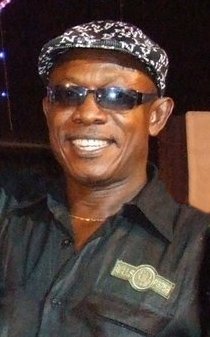
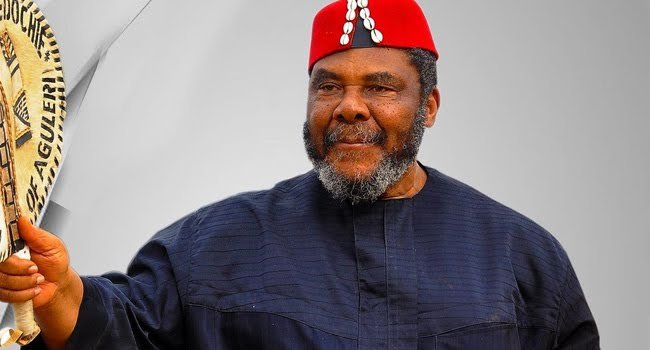
Nkem Owoh created a character so convincing that the character’s name became more famous than his own. The rural Igbo man navigating absurd situations, Osuofia, made Owoh a household name across Nigeria and the wider African continent through a series of films in the early 2000s. But before the comedy fame, he was already a recognised actor with real dramatic range, capable of serious work that the slapstick roles sometimes obscured. That range is the thing long-term observers of his career remember most clearly.
He was born on 7 May 1958 in Amagu-Izhia in Ebonyi State, and studied Theatre Arts at the University of Benin, where he developed the comedic discipline and stage craft that would sustain a career of more than four decades. His entry into professional performance began in stage theatre in Benin before television and eventually film opened larger audiences to his work.
Beyond comedy, Nkem Owoh has been a consistent voice for the recognition of Igbo cultural traditions in Nigerian entertainment and has used the platform of his celebrity to engage with social and political issues in Nigeria. His song I Go Chop Your Dollar, from the Osuofia in London soundtrack, became a cultural flashpoint in discussions about Nigerian identity and international perceptions of the country.
At a glance
Full name
Nkem Owoh
Nickname
Osuofia
Date of birth
7 May 1958
Birthplace
Amagu-Izhia, Ebonyi State
Nationality
Nigerian
Education
University of Benin (Theatre Arts)
Active
1980s to present
Net worth estimate (2026)
~$1m to $3m (multiple entertainment sources; estimate, not verified)
Early life and education
Nkem Owoh was born on 7 May 1958 in Amagu-Izhia, a community in what is now Ebonyi State in southeastern Nigeria. His upbringing in an Igbo village community gave him direct exposure to the storytelling and performance traditions that run through Igbo cultural life, including the masquerade performances and communal storytelling events that form part of village social fabric.
He pursued formal training in Theatre Arts at the University of Benin, one of Nigeria’s main centres for dramatic arts education. The University of Benin’s Theatre Arts department in the 1970s and 1980s was producing some of Nigeria’s most technically grounded stage performers, and the training Nkem Owoh received there gave his comedy a technical foundation that separated it from pure instinctive performance.
His professional career began in stage theatre in Benin City before the expanding television drama scene in Nigeria offered him opportunities to reach national audiences. He worked in television productions through the 1980s and early 1990s, building a reputation as a character actor of unusual versatility before the Nollywood video film boom gave him the mass-market platform that his work had been building toward.
Osuofia and Nollywood career
Nkem Owoh’s most famous creation is the character Osuofia, a boisterous, cunning, and often hapless village man whose encounters with modernity, education, and urban culture provide the comedic engine of the films he anchors. The character draws on a long tradition of West African comic archetypes that pit rural common sense against urban sophistication, and Nkem Owoh brought to it a physical comedy and vocal variety that made it distinctly his own.
Osuofia in London, released in 2003, became one of the highest-grossing Nollywood films of its year and one of the most widely distributed Nigerian films internationally to that point. The film’s premise, placing an Igbo village man in London to claim an inheritance, gave it a fish-out-of-water comedy structure that translated across cultural contexts. It was distributed in markets across West Africa and in diaspora communities in the UK and North America, reaching audiences who had not previously engaged with Nollywood content.
The film’s soundtrack included I Go Chop Your Dollar, a comedic song that took the voice of a 419 scammer with comic exaggeration. The song became enormously popular but also attracted criticism from those who felt it romanticised internet fraud. Nkem Owoh addressed the controversy in several interviews, distinguishing between comedic social commentary and endorsement of criminal behaviour. The debate around the song placed him in the centre of a broader conversation about how Nigerian entertainment engages with the country’s reputation internationally.
Other notable work
Beyond Osuofia, Nkem Owoh has built a Nollywood filmography that includes more than 200 productions across comedic and dramatic genres. His work alongside Osita Iheme in the Aki na Ukwa franchise extended his reach into the comedy duos tradition that has a strong following in eastern Nigerian entertainment markets. His dramatic work, less discussed than his comedic output but present throughout his career, shows a range that is often undervalued because of how definitively Osuofia has defined public perception of him.
He has appeared in numerous productions addressing social issues in Nigeria, including films that deal with poverty, corruption, community conflict, and generational change. His ability to handle those themes within a broadly comedic frame without trivialising them is one of the craft elements that his peers and critics most consistently note in discussions of his work.
Personal background
Nkem Owoh is married and has children, but he has consistently kept his family life out of public discourse. In a career characterised by public performance and cultural commentary, his personal life represents a deliberate private sphere that he has maintained across decades of public prominence. He has stated in interviews that he considers the separation of public persona and private life to be an important professional discipline.
He has spoken about his Igbo heritage as a fundamental part of his identity and has been involved in cultural initiatives that seek to document and preserve Igbo performance traditions. His engagement with cultural preservation questions alongside his entertainment career reflects the broader civic interest that has made him a respected figure beyond his film and comedy work.
Awards and recognition
Nkem Owoh has received lifetime achievement recognition from multiple Nigerian entertainment institutions, including the Africa Movie Academy Awards and City People Movie Awards. He has been honoured by Igbo cultural organisations for his contribution to the representation of Igbo traditions in Nigerian entertainment. His role as cultural ambassador for southeastern Nigerian performance traditions has been recognised by both government and civil society organisations.
He received a National Merit Award from the Nigerian government in recognition of his contribution to the arts and his long career in Nigerian entertainment. The Osuofia character has been cited in academic studies of Nigerian popular culture as one of the most significant comic creations in the history of Nollywood.
Money and net worth
Nkem Owoh’s 2026 net worth is estimated at between $1 million and $3 million by multiple Nigerian entertainment sources. The figure reflects decades of film and television income, music royalties from Osuofia in London’s soundtrack, stage performance fees, and income from corporate appearances and cultural events. As one of the most recognisable comedic performers in Nigerian entertainment history, his corporate event and speaking fees remain strong relative to his level of recent film output.
Nollywood’s historical pay structures, which were lower than those of the streaming era, mean that the financial returns from his most productive decades were more modest than equivalent volume of work would generate today. His value as a brand ambassador for Igbo and Nigerian cultural identity has created an endorsement pipeline that supplements his direct entertainment income.
Selected films
Osuofia in London (2003) and its sequel
Ukwa
Police Recruit
The Master
Common questions
Who is Osuofia?
Osuofia is the comedic character created by Nkem Owoh and most famously portrayed in the 2003 Nollywood film Osuofia in London. The character is a village man from southeastern Nigeria whose encounters with London life and international inheritance law provide the comic engine of the film. The character’s name has become a cultural shorthand in Nigeria for a particular kind of native intelligence meeting foreign sophistication.
Where is Nkem Owoh from?
He was born on 7 May 1958 in Amagu-Izhia, a community in what is now Ebonyi State in southeastern Nigeria. He studied Theatre Arts at the University of Benin before beginning his professional performance career in stage theatre in Benin City.
What is the controversy around I Go Chop Your Dollar?
The song from the Osuofia in London soundtrack takes the comedic voice of a 419 internet scammer and generated criticism from those who felt it glorified fraud. Nkem Owoh has consistently described it as social satire rather than endorsement, distinguishing between comedic commentary on a social reality and promotion of criminal behaviour.
How many films has Nkem Owoh appeared in?
He has appeared in over 200 Nollywood productions across comedic and dramatic genres since the late 1980s, making him one of the most prolific performers in Nollywood history by volume of output alongside his outsized cultural impact through the Osuofia character.
What is Nkem Owoh’s net worth in 2026?
Multiple Nigerian entertainment sources estimate his net worth at between $1 million and $3 million as of 2026, reflecting decades of film income, music royalties, stage performance fees, corporate appearance income, and endorsement deals linked to his status as a cultural ambassador for Igbo and Nigerian entertainment traditions.
Conclusion
Nkem Owoh, best known as Osuofia, is one of the most beloved comic actors in Nollywood history. His comic timing made him a favourite of audiences. That reputation has endured for decades.
His Osuofia in London films and a distinctive comic style made him a household name across Nigeria and the diaspora. Those roles became some of the most recognisable in Nigerian comedy. They defined his public image.
A career spanning decades has secured his place as a comedy legend of Nigerian cinema. He has remained associated with a particular brand of humour. He is regarded as one of the industry’s great comic talents.
References
Information in this profile draws on reporting and data from The Punch, Vanguard, City People Movie Awards, Africa Movie Academy Awards, academic studies of Nigerian popular culture, and Nollywood industry reporting from Guardian Nigeria and The Pulse Nigeria.
Max Adeyemi is a Lagos-based writer covering Nigerian and African entertainment, sport, business, and culture. He has spent over a decade tracking the careers, controversies, and quiet achievements of the people who move the culture. He writes all profiles on Nolly.