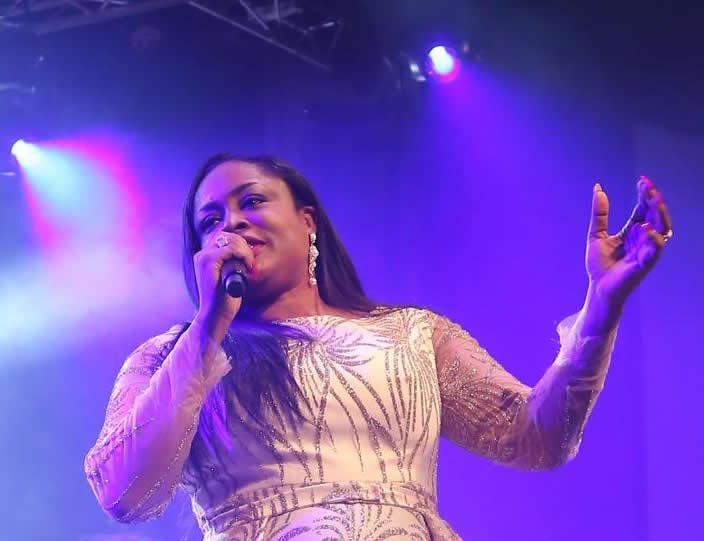
Tope Alabi is one of very few Nigerian gospel artists to build a genuine crossover audience, people who do not primarily identify as Christian but know her music because it appears at funerals, weddings, naming ceremonies, and family gatherings across Yorubaland. Her work in Yoruba gospel predates the streaming era and was built on cassette and CD distribution through a church network that covered most of Southwest Nigeria. That foundation, built without digital tools, is one of the most durable audience bases in Nigerian gospel music.
She was born on 15 September 1970 in Lagos and grew up in a Yoruba Christian household where both music and faith were central. Before gospel music became her full-time calling, she worked as an actress in Yoruba films and theatre, building performance confidence and public visibility that she later transferred into her music ministry. That acting background gives her performances an emotional narrative quality that is distinguishable from singers who came to gospel music directly through church choirs.
Songs including Oniduro Mi, Imole De, Ore Ofe, and Agbara Olorun have become part of the permanent repertoire of Yoruba Christian celebration, sung at naming ceremonies, weddings, graduation parties, and church events across southwestern Nigeria and in Yoruba diaspora communities worldwide. As of 2026, she is one of the most commercially successful gospel artists in Nigerian music history when measured by the breadth and durability of her audience across age groups and generations.
In brief
Full name
Tope Alabi
Date of birth
15 September 1970
Birthplace
Lagos, Nigeria
Nationality
Nigerian
Genre
Yoruba Gospel / Contemporary Christian Music
Spouse
Soji Alabi
Active
Late 1990s to present
Net worth estimate (2026)
~$2m to $4m (multiple sources; estimate, not verified)
Early life and acting career
Tope Alabi was born on 15 September 1970 in Lagos. She grew up in a Yoruba-speaking household where the Yoruba Christian musical tradition, with its blending of highlife rhythms, juju music influences, and Christian worship themes, was a constant presence. Her family’s church involvement gave her the theological vocabulary and the musical aesthetic that would characterise her career.
Before music became her primary vocation, she worked as an actress in Yoruba language films and theatre productions. The Yoruba travelling theatre tradition from which she came has a long history of combining music, performance, and religious and moral themes, and her time in that environment gave her both performance confidence and an understanding of how to communicate with large, diverse audiences. Her acting credits include appearances in Yoruba films of the late 1990s and early 2000s, a period when she was building the public recognition that her subsequent gospel career would inherit and expand.
Her transition to full-time gospel music happened through a gradual shift in her public activities rather than a sudden career change. She began releasing gospel recordings while still involved in acting, and as the reception to her music grew, the balance of her public life shifted accordingly. By the early 2000s, gospel music had become her primary identity, and her acting work receded into the background.
Gospel music career
Tope Alabi’s recording career in gospel music spans more than two decades and has produced a catalogue of extraordinary size. She has released dozens of albums, each containing multiple songs that have achieved widespread recognition and usage in Yoruba Christian communities. Her most celebrated songs, including Oniduro Mi (My Guarantor) and Imole De (Light Has Come), have been covered and reinterpreted by other artists across Nigeria and in Yoruba diaspora communities in the United Kingdom and North America.
Her music blends the rhythmic traditions of Yoruba popular music, including influences from juju, fuji, and highlife, with contemporary gospel production. That combination makes her music at the same time familiar to older Yoruba-speaking listeners who grew up with those traditional music forms and accessible to younger audiences raised on contemporary gospel and Afropop. The intergenerational reach of her music is one of the factors most consistently cited in analyses of her commercial durability.
She performs at an enormous range of events, from large church conventions to private family celebrations, and her presence at a naming ceremony or wedding is considered a mark of significant prestige and celebration. That function as a cultural celebration artist as well as a church musician gives her a market position that is distinct from artists whose audience is limited to specifically Christian contexts.
Life beyond the spotlight
Tope Alabi is married to Soji Alabi and the couple have children together. Her husband has been involved in her music ministry and business management. She has spoken about her marriage as a partnership in ministry as well as in personal life, and the couple’s professional collaboration is a consistent feature of how her career is organised and managed.
She generated controversy in 2021 when she publicly criticised a worship song by another Nigerian gospel artist that had been adapted from a secular Afropop track, arguing that the source material was inappropriate for Christian worship. The statement sparked a public debate about the boundaries between secular and sacred music in Nigerian Christianity and generated significant media coverage. She has continued to speak on matters of faith and culture with the directness that has characterised her public persona throughout her career.
Awards and recognition
Tope Alabi has received multiple awards from Yoruba cultural organisations, Nigerian gospel music bodies, and Christian media institutions. She has won City People Music Awards, Headies nominations for gospel music, and recognition from southwestern Nigerian state governments for her contribution to Yoruba cultural life. Her catalogue is considered part of the permanent cultural heritage of Yoruba Christianity.
Reported net worth
Tope Alabi’s 2026 net worth is estimated at between $2 million and $4 million by multiple sources. That figure reflects album royalties from dozens of releases across more than two decades, performance fees from a constant schedule of church, private event, and festival appearances, and the licensing and usage income from songs embedded in Yoruba cultural celebrations. Her role as a cultural celebration artist whose music is played at naming ceremonies, weddings, and graduations creates a performance income stream that is more consistent and diverse than that of artists whose market is limited to specifically church audiences.
Why Tope Alabi matters
Tope Alabi is one of the most influential Yoruba gospel artists, who came up scoring Yoruba film soundtracks before a prolific recording career. Her worship style blends Yoruba idiom with contemporary praise and has helped shape the genre for decades.
People also ask
What language does Tope Alabi sing in?
Tope Alabi sings primarily in Yoruba, and her work is the defining body of Yoruba-language contemporary gospel music in Nigeria. Her songs also include Yoruba Pidgin and occasional English phrases, but the core of her musical identity is rooted in the Yoruba language and its musical traditions including juju and fuji influences.
Did Tope Alabi act before gospel music?
Yes. She worked as an actress in Yoruba films and theatre productions before gospel music became her primary career. Her acting background in the Yoruba travelling theatre tradition gave her performance confidence and public recognition that she transferred into her music ministry from the late 1990s onward.
What are Tope Alabi’s most famous songs?
Her most widely known songs include Oniduro Mi, Imole De, Ore Ofe, and Agbara Olorun. These compositions have become part of the permanent repertoire of Yoruba Christian celebration and are sung at naming ceremonies, weddings, graduation events, and church services across southwestern Nigeria and in Yoruba diaspora communities globally.
Who is Tope Alabi married to?
She is married to Soji Alabi, and the couple have children together. Her husband has been involved in her music ministry and business management, and their professional partnership is a consistent feature of how her career is organised across its more than two decades of commercial activity.
What is Tope Alabi’s net worth?
Multiple sources estimate her net worth at between $2 million and $4 million as of 2026, reflecting album royalties from dozens of releases, performance fees from a constant schedule of church and private celebration events, and licensing income from songs embedded in Yoruba cultural and Christian celebrations.
Conclusion
Tope Alabi is one of the most influential Yoruba gospel artists. Her career began with scoring soundtracks for Yoruba films. That grounding shaped her distinctive musical voice.
Her worship style blends Yoruba idiom with contemporary praise. It has helped shape the direction of the genre over many years. Few artists have been as closely identified with Yoruba gospel.
A prolific and enduring figure, she remains central to Nigerian gospel music. Her long career has spanned significant changes in the industry. She is regarded as one of its most important voices.
Sources and further reading
Information in this profile draws on reporting from The Punch, Vanguard, City People Music Awards, Headies Awards records, Guardian Nigeria, and Yoruba entertainment and cultural media coverage of her ministry and career.
Max Adeyemi is a Lagos-based writer covering Nigerian and African entertainment, sport, business, and culture. He has spent over a decade tracking the careers, controversies, and quiet achievements of the people who move the culture. He writes all profiles on Nolly.