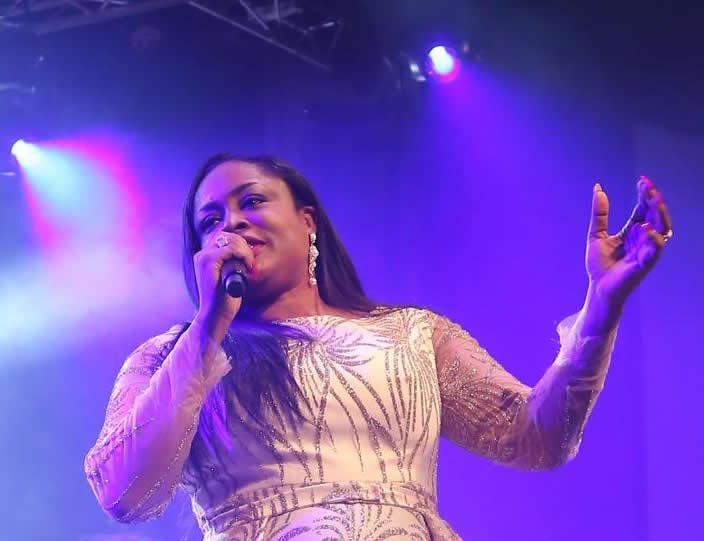
Ada Ehi is one of the Nigerian gospel artists with the clearest international footprint, her music circulates in Nigerian church communities across the UK, US, and Canada with a frequency that most domestic gospel acts do not achieve. She works with Loveworld Records, the label of Pastor Chris Oyakhilome’s ministry, which provides institutional distribution infrastructure. But the audience she has built responds to her voice specifically rather than to the label or the ministry behind it. That voice, a distinctive, unhurried contralto, has become one of the defining sounds of Nigerian contemporary gospel.
She was born in 1982 in Delta State and grew up in a Christian family where church involvement shaped her earliest musical experiences. Her voice, which has a clarity and emotional directness that her recordings consistently showcase, developed through years of church choir involvement and ministry singing before she entered the recording industry. Her debut album and subsequent releases built a following in Nigeria and within African diaspora church communities in the UK, from which base she has expanded into wider international Christian music markets.
Songs including I Choose You, Beyond What My Eyes Can See, Only You Jesus, and Fulfill have made her catalogue a consistent presence on Nigerian and African gospel streaming playlists. Her approach to songwriting combines the declaratory praise tradition of Nigerian Pentecostal worship with a lyrical sophistication that has attracted positive reviews from both Nigerian and international gospel music observers.
Key facts
Full name
Ada Ehi Braide
Date of birth
1982
Birthplace
Delta State, Nigeria
Nationality
Nigerian
Genre
Gospel / Contemporary Christian Music
Based
United Kingdom (with active Nigeria and Africa ministry)
Active
2000s to present
Net worth estimate (2026)
~$500k to $1m (multiple sources; estimate, not verified)
Early life and musical formation
Ada Ehi was born in 1982 in Delta State, Nigeria, in the Niger Delta region. Her early musical formation happened through church involvement, where the gospel and worship music of her church community gave her both a vocal training environment and the theological framework that shapes her songwriting. Delta State’s Christian communities in the 1980s and 1990s were shaped by the broad influence of various Pentecostal and charismatic church movements that had strong music ministry emphases.
Her decision to relocate to the United Kingdom brought her into contact with the British African diaspora gospel scene, which in the 2000s and 2010s was producing significant output and building international connections in ways that the primarily Nigerian-market gospel scene was not consistently achieving. Based in the UK, she developed production relationships and access to recording infrastructure that shaped the sound of her most successful albums.
She has maintained active ministry and recording connections in Nigeria and across Africa throughout her UK-based period, returning regularly for concerts, conferences, and recording sessions. That dual presence has allowed her to serve both the diaspora audience that forms her UK base and the Nigerian home market that remains the largest consumer base for her music.
Music and recordings
Ada Ehi’s recording catalogue spans multiple albums released through the 2000s and 2010s. Her most widely known compositions include I Choose You, a love and devotion song that has been widely adopted in Nigerian wedding worship contexts, Beyond What My Eyes Can See, which addresses faith in circumstances that contradict visible reality, and Only You Jesus, a declaratory praise composition. Each of these songs demonstrates her ability to write in the accessible emotional register that makes gospel songs useful for congregational and personal devotional purposes simultaneously.
Her production approach has evolved across her career, with later releases showing more international production influence than her earlier recordings, which were more directly rooted in Nigerian Pentecostal gospel conventions. That evolution reflects both the personal growth of her musical sensibility and the production access her UK-based career has given her.
She has performed at major Christian conferences in the UK, Nigeria, and other African countries, and her recordings are available across all major streaming platforms. Her Spotify and Apple Music presence gives her direct access to the global streaming audience for African gospel music, which has grown significantly through the 2020s.
Earnings and reported net worth
Ada Ehi’s 2026 net worth is estimated at between $500,000 and $1 million by multiple sources. That figure reflects recording royalties from her catalogue, performance fees from Nigerian and UK-based Christian conference appearances, streaming revenue, and income from her ministry activities across Africa and the diaspora. Gospel music generates lower commercial income per unit than mainstream pop, but her consistent catalogue and dual Nigeria-UK market reach give her a financially stable position within the sector.
Selected songs
“Congratulations”
“I Testify”
“Now”
“The Word”
Frequently asked questions
Where is Ada Ehi from?
She was born in 1982 in Delta State, Nigeria. She later relocated to the United Kingdom, where she has based her music ministry and recording career while maintaining active connections to Nigeria and the broader African gospel music market through regular touring and recording visits.
What are Ada Ehi’s most popular songs?
Her most widely known compositions include I Choose You, Beyond What My Eyes Can See, Only You Jesus, and Fulfill. These songs have found consistent placement on Nigerian and African gospel streaming playlists and have been adopted in church worship settings across Nigeria and in African diaspora communities globally.
Where does Ada Ehi live?
She is based in the United Kingdom, having relocated there from Nigeria during her career. She maintains active ministry and recording connections in Nigeria and across Africa, returning regularly for concerts and conferences, while her UK base gives her access to the British African diaspora gospel scene and international contemporary Christian music production networks.
What is Ada Ehi’s net worth?
Multiple sources estimate her net worth at between $500,000 and $1 million as of 2026, reflecting recording royalties from her catalogue, conference performance fees in Nigeria and the UK, streaming revenue, and ministry activity income across Africa and the diaspora.
Conclusion
Ada Ehi brought a polished, pop-inflected sound to Nigerian gospel. Her music borrows freely from contemporary pop production. That approach set her apart from more traditional gospel styles.
Songs like “Congratulations” and “I Testify” widened the genre’s appeal to younger listeners. Her records found audiences beyond the usual gospel base. That crossover appeal became part of her identity.
Her contemporary style has made her one of the more recognisable gospel artists of her generation. She blends faith-based content with mainstream production values. She remains a prominent voice in modern Nigerian gospel.
References
Information in this profile draws on reporting from The Pulse Nigeria, Vanguard, Guardian Nigeria, and African and UK Christian media coverage of her recordings and ministry activities.
Max Adeyemi is a Lagos-based writer covering Nigerian and African entertainment, sport, business, and culture. He has spent over a decade tracking the careers, controversies, and quiet achievements of the people who move the culture. He writes all profiles on Nolly.