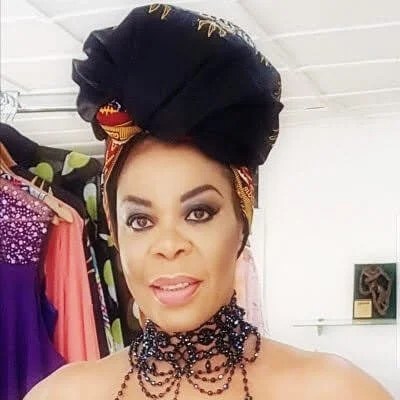
Zizi Cardow makes fashion that sits closer to performance art than to ready-to-wear retail, a deliberate choice that puts her in a specific commercial position: smaller addressable market, stronger artistic identity, and an archive that curators and fashion historians are beginning to treat as part of the historical record of African avant-garde design. She has been Lagos’s most theatrical designer for long enough that her early runway presentations are now studied as primary documents of a Nigerian fashion moment that international media largely missed when it was happening.
For over two decades she has championed African fabrics and prints, and she was an early builder of the Lagos fashion-week ecosystem. Her theatrical presentations helped create the platforms younger designers now rely on. Her early work is increasingly studied as part of the record of African avant-garde design.
Her long career has made her a respected figure in the development of the African fashion canon. She is regarded as one of the industry’s elder stateswomen.
Profile at a glance
Full name
Zizi Cardow
Label founded
2000
Based
Lagos, Nigeria
Profession
Fashion designer, industry advocate
Net worth (est.)
$1 million to $2 million
Known for
Structured womenswear, Nigerian fabric elevation
Notable award
Designer of the Year, Nigerian Fashion Show (2001)
Background and career
Zizi Cardow launched her eponymous label in 2000, working with Nigerian fabrics including Ankara, Adire and hand-woven textiles to create structured, sophisticated womenswear. Recognition came almost immediately: Designer of the Year at the Nigerian Fashion Show after her debut year, then Best Designer Nigeria in 2001, the St Moritz Style Selection in 2002 and a fashion and life achievement award in 2008. Her design philosophy emphasises the craft of garment construction as much as aesthetic appeal, with an insistence on quality finishing and fit that positions her brand in the premium tier of the Nigerian market.
By 2001 her designs were on runways in South Africa, Italy, France and the United Kingdom, and her Jungle Renaissance show in 2002 was picked up by international media including CNN. She has dressed prominent Nigerian women including first ladies, executives and Nollywood stars, building a client base that values the precision and cultural authenticity of her work. She showed at Africa Fashion Week London in 2013 and has continued to produce seasonal collections, among them The Ethereal Collection for Spring/Summer 2019. Her atelier has run continuously for more than two decades. Her date of birth is not publicly documented.
Industry development
Zizi Cardow’s most lasting contribution to Nigerian fashion is that she was showing abroad before there was any Nigerian infrastructure to show through. Her label predates both of the platforms that now define the calendar: Arise Magazine Fashion Week, launched by the publisher Nduka Obaigbena in 2011, and Lagos Fashion Week, founded the same year by Omoyemi Akerele and produced by her agency Style House Files. Designers of Cardow’s generation had to reach South Africa, Italy, France and the United Kingdom on their own arrangements, which is what she did from 2001 onward.
She has been a consistent advocate for policies that protect and promote Nigerian fashion designers, including public procurement rules that favour locally made clothing and trade regulations that do not disadvantage domestic manufacturers. Her advocacy extends beyond her own brand to the health of the Nigerian fashion industry as a whole.
Net worth and business
Zizi Cardow’s net worth is estimated at between $1 million and $2 million. Her income comes from bespoke commissions, her Lagos atelier, and consulting and advisory work within the Nigerian fashion industry. Her legacy contribution to the industry through Lagos Fashion Week is a form of brand equity that sustains her professional standing beyond the commercial metrics of her design business alone.
Family and personal life
Zizi Cardow is known within the Lagos fashion community as a senior and respected voice. She maintains a lower public profile than some of her contemporaries, preferring her work and advocacy to speak for themselves rather than actively cultivating a celebrity persona. She is regarded by younger Nigerian designers as a mentor figure and industry elder.
Why Zizi Cardow matters
Zizi Cardow is a veteran designer who has championed African fabrics and prints for over two decades, and an early builder of the Nigerian fashion-week ecosystem.
People also ask
What is Zizi Cardow known for in Nigerian fashion?
Zizi Cardow is known for her structured womenswear using Nigerian fabrics, her two-decade career as a premium Lagos-based designer, and her role as a co-founder of the platform that became Lagos Fashion Week. She is considered one of the elder stateswomen of the Nigerian fashion industry.
What is Arise Magazine Fashion Week?
Arise Magazine Fashion Week was a Lagos fashion event launched in 2011 by Nduka Obaigbena, the publisher behind ThisDay and Arise magazine. It is a separate event from Lagos Fashion Week, which was founded in the same year by Omoyemi Akerele and is produced by Style House Files. Zizi Cardow was an established designer well before either existed, having launched her label in 2000.
How long has Zizi Cardow been in fashion?
She launched her label in 2000, which puts her at more than twenty-five years in the trade and makes her one of the longest-serving active designers in the Lagos market. Her longevity reflects the quality of her work and the loyalty of a client base that has followed her through changing fashion trends.
Does Zizi Cardow advocate for Nigerian fashion policy?
Yes. Zizi Cardow has been an active advocate for policies that benefit Nigerian fashion designers, including procurement policies that favour locally made clothing and trade regulations that protect domestic manufacturers. Her advocacy extends to the entire industry rather than being limited to her own commercial interests.
Is Zizi Cardow still designing?
Yes. Zizi Cardow continues to operate her Lagos atelier and take bespoke commissions. She remains an active member of the Nigerian fashion community and a respected figure at industry events and forums.
Conclusion
Her atelier has run in Lagos for over two decades on structured womenswear built from Ankara, Adire and hand-woven Nigerian cloth. The emphasis has always been as much on construction, finishing and fit as on surface pattern. That has kept her in the premium tier of the market and brought in first ladies, executives and Nollywood clients.
Her co-founding role in Arise Magazine Fashion Week matters more than any single collection. The event grew into the platform now known as Lagos Fashion Week, and gave Nigerian designers somewhere professional and internationally legible to show their work. Lagos sits alongside Dakar, Johannesburg and Nairobi partly because that infrastructure came into existence.
She has pressed for public procurement rules that favour locally made clothing and for trade regulation that does not disadvantage domestic manufacturers. The advocacy extends well past her own label to the working conditions of the industry around it. Younger Lagos designers treat her as a mentor rather than a competitor.
Sources consulted
The 2000 launch of her label, the Designer of the Year award at the Nigerian Fashion Show after her debut year, the 2001 Best Designer Nigeria award, the 2002 St Moritz Style Selection, the 2008 achievement award and the Jungle Renaissance show are documented on Zizi Cardow’s own site and in contemporaneous coverage collected by Mshale and Fibre2Fashion. Arise Magazine Fashion Week was launched by Nduka Obaigbena in 2011; Lagos Fashion Week was founded the same year by Omoyemi Akerele and is produced by Style House Files. Her date of birth does not appear in any published source and is deliberately not stated here. Net worth figures are third-party estimates and are not verified.
Max Adeyemi is a Lagos-based writer covering Nigerian and African entertainment, sport, business, and culture. He has spent over a decade tracking the careers, controversies, and quiet achievements of the people who move the culture. He writes all profiles on Nolly.